

What Is Demurrage?
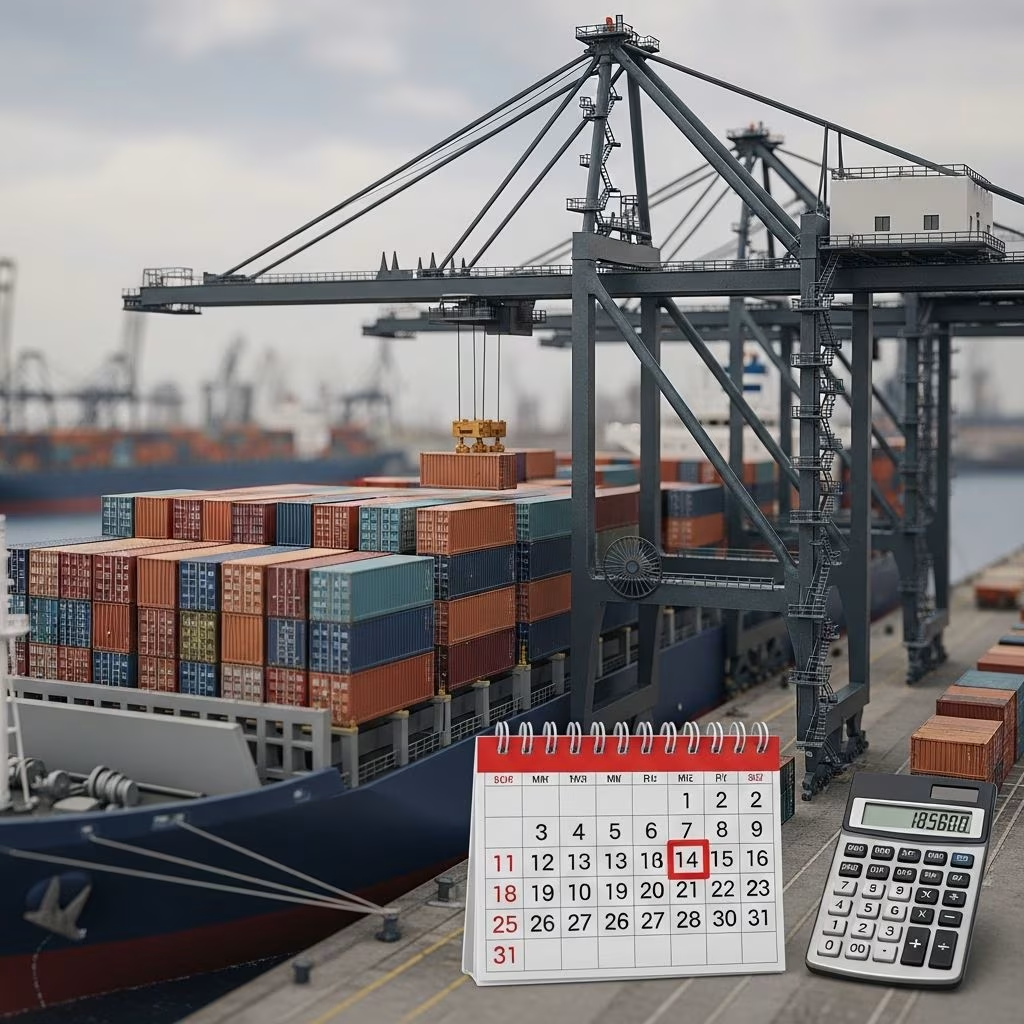
Demurrage is a charge levied by shipping lines and port terminals when cargo remains at a port or terminal facility beyond the agreed-upon free time period specified in a shipping contract. The term originates from vessel chartering, where it represents liquidated damages owed by a charterer to a shipowner for exceeding the allowed loading and unloading time, known as laytime. In modern international shipping, demurrage has become a standard mechanism to incentivize the prompt movement of goods through ports and the timely return of containers, ensuring efficient global supply chain operations.
Demurrage is fundamentally different from detention charges, a distinction that often confuses shippers and importers. While demurrage applies to cargo sitting in the port terminal with goods still inside the container, detention charges apply to empty containers that are not returned to the designated facility within the agreed timeframe. Understanding this critical difference is essential for managing shipping costs effectively.
Understanding Free Time in Shipping Contracts
Every shipping contract includes a specified free time allowance, which represents the grace period during which cargo can remain at the port or terminal without incurring additional charges. This free time typically ranges from three to seven days, depending on the specific port, carrier, and negotiated contract terms. The free time period begins once the vessel has been made available for loading or unloading, and it encompasses all time spent on port operations.
Free time is a crucial element of shipping economics because it provides importers, exporters, and shippers with a reasonable window to organize their logistics, coordinate customs clearance, arrange transportation, and complete all necessary documentation without penalty. However, once the free time expires, demurrage charges begin accumulating on an hourly or daily basis until the cargo is finally removed from the terminal.
How Demurrage Charges Are Calculated
Demurrage calculation involves two primary components: the applicable rate and the duration of excess time. Understanding how these factors combine will help you anticipate and manage these costs.
Rate Structure
Demurrage rates are typically expressed as a per-container per-day fee, though some arrangements may charge by the hour. The specific rates are negotiated between the shipper and carrier and clearly stated in the shipping contract. According to industry standards, demurrage charges generally range from $75 to $300 per container per day, with rates often escalating after the initial five days of excess time. Different carriers, ports, and regions may charge substantially different rates, making it essential to review contract terms carefully.
Time Calculation
Once the free time period expires, demurrage charges accrue based on the number of additional hours or days the cargo occupies port space. Some carriers apply flat daily rates, while others may charge on an hourly basis, particularly for shorter delays. Progressive rate increases are common—meaning the per-day charge may increase after a certain number of excess days to further incentivize cargo clearance.
Who Pays Demurrage Charges?
Responsibility for demurrage payment depends on the Incoterms used in the sales contract and where the free time period applies. Generally, demurrage is paid by the party who is responsible for the delay: typically the importer when delays occur at the destination port during unloading, or the exporter when delays occur at the origin port during loading. However, contract terms can shift this responsibility, and it is crucial to clarify payment obligations before entering a shipping arrangement.
In many cases, the consignee or consignee agent is charged demurrage when cargo cannot be cleared from the terminal within the allowed free time. This incentivizes receivers to promptly clear customs, arrange final delivery, and remove goods from port facilities.
Common Causes of Demurrage Charges
Demurrage fees often result from circumstances both within and beyond the shipper’s control:
- Delays in customs clearance due to incomplete or incorrect documentation
- Missing or incorrect shipping documents preventing timely cargo release
- Disputes between shipper and consignee regarding cargo specifications or quality
- Insufficient funds or payment issues preventing timely customs clearance
- Port or terminal congestion beyond the shipper’s control
- Strikes, labor actions, or other unforeseen port disruptions
- Official inspections, police holds, or customer-initiated cargo stops
- Mismatch between received cargo and sales order specifications
- Delays in arranging onward transportation or final delivery
Demurrage in Container Haulage
In the container trucking industry, demurrage takes on a slightly different form. When containers are delivered to customers for unloading, acceptable tipping (unloading) times are typically between three and four hours. Any time spent on site beyond this window is considered demurrage, and haulers charge an hourly rate for each hour after the allowed time. Additionally, shipping lines may charge demurrage to cover container redecoration or cleaning after use, or to penalize late return of empty containers to specified facilities.
Demurrage Versus Despatch
While demurrage penalizes delays, the inverse concept, called despatch, rewards efficiency. If a charterer or cargo receiver requires less vessel time than the laytime allowed in the charter agreement, the shipowner may be required to pay despatch compensation for the time saved. This incentive structure encourages all parties to move cargo expeditiously while recognizing cost savings when operations are completed ahead of schedule.
Practical Strategies to Minimize Demurrage Charges
Documentation Management
One of the most effective ways to prevent demurrage is to ensure all shipping documentation is accurate, complete, and transmitted promptly. Incomplete or incorrect paperwork is a leading cause of customs delays and cargo detention. Implementing digital documentation systems, such as Electronic Data Interchange (EDI), can streamline the process and reduce manual errors.
Proactive Customs Coordination
Arrange customs clearance before the vessel arrives whenever possible. Coordinating with customs brokers, ensuring documentation is filed early, and resolving potential issues in advance can prevent delays that trigger demurrage charges.
Off-Site Laydown Areas
Using off-site laydown or storage areas can help avoid demurrage charges by providing temporary cargo storage outside the high-cost port terminal environment. This strategy is particularly useful when final destination arrangements are not finalized by the time free time expires.
Contract Negotiation
Carefully negotiate demurrage terms with carriers and ensure you understand the specific rates, free time allowances, and payment responsibilities for each shipment. Different ports and carriers have varying demurrage structures, so reviewing contract details is essential.
Efficient Logistics Planning
Coordinate all logistics elements—transportation, delivery scheduling, and warehouse capacity—to ensure cargo can be cleared and moved promptly once it arrives at the port.
Impact on Supply Chain Costs and Pricing
Demurrage charges can significantly impact the total cost of a shipment, ultimately affecting profitability and pricing decisions. When demurrage fees are substantial or frequent, companies often adjust product pricing to offset these unexpected costs, which can make goods less competitive in the market. Understanding and minimizing demurrage is therefore not just a logistics concern but a critical financial management issue for importers and exporters.
Demurrage in Different Shipping Contexts
Full Container Load (FCL) Shipments
For FCL shipments, demurrage typically applies once the container has been delivered to the importer’s location and remains there beyond the free time period while still full of cargo. Daily rates for FCL demurrage are generally higher than less-than-container-load (LCL) equivalents due to the container’s value and earning potential for the carrier.
Less-Than-Container-Load (LCL) Shipments
LCL cargo consolidated at a freight station incurs demurrage if it remains unclaimed or uncleared beyond the free time. The demurrage for consolidated LCL cargo is typically lower per shipment than FCL but can accumulate across multiple smaller shipments stored together.
Vessel Chartering
In vessel chartering contexts, demurrage represents the daily compensation owed to the shipowner if cargo loading or unloading extends beyond the laytime specified in the charter party. These rates are typically calculated to cover the daily time charter rate, daily voyage costs, and the shipowner’s risk premium. Demurrage rates in vessel chartering can be substantially higher than container demurrage due to the vessel’s size and operational costs.
Technology and Digital Solutions
Modern shipping companies are increasingly implementing digital platforms and automation tools to reduce demurrage. Real-time cargo tracking, automated notification systems, and integrated customs documentation platforms enable faster processing and earlier problem identification. Many carriers now provide online portals where shippers can monitor free time remaining, arrange pickups, and submit documentation electronically.
Regional Variations in Demurrage Practices
Demurrage practices and rates vary significantly by region and individual port. Major container ports in Asia, Europe, and North America often have standardized free time allowances (typically four to five days for standard operations), but rates and grace periods may differ for specialized cargo, during peak seasons, or at smaller regional ports. When shipping internationally, it is essential to research the specific demurrage terms applicable at both the origin and destination ports.
Frequently Asked Questions
Q: What is the difference between demurrage and detention?
A: Demurrage applies to cargo sitting in the port terminal inside a container, while detention charges apply to empty containers not returned to designated facilities after the free time expires.
Q: How long is the typical free time period?
A: Free time typically ranges from three to seven days, depending on the port, carrier, and negotiated contract terms.
Q: What is the average cost of demurrage?
A: Demurrage charges generally range from $75 to $300 per container per day, with rates typically increasing after the initial five days of excess time.
Q: Can demurrage charges be waived?
A: Demurrage charges are typically contractually binding and are not waived due to holidays or other circumstances, though certain shipping lines may offer grace periods or negotiated terms in specific situations.
Q: Who is responsible for paying demurrage in an import transaction?
A: Generally, the importer or consignee is responsible for demurrage charges at the destination port when cargo cannot be cleared within the allowed free time.
Q: How can I reduce demurrage charges?
A: You can reduce demurrage by ensuring accurate documentation, coordinating early customs clearance, using off-site storage areas, negotiating favorable contract terms, and planning logistics efficiently.
References
- Demurrage — Wikipedia. Accessed 2025. https://en.wikipedia.org/wiki/Demurrage
- What is demurrage? — Clarksons. Accessed 2025. https://www.clarksons.com/home/glossary/d/what-is-demurrage/
- Demurrage: Meaning & Charges Guide — Trade Finance Global. Accessed 2025. https://www.tradefinanceglobal.com/freight-forwarding/demurrage/
- 6 Tips to Avoid Demurrage and Per Diem Detention Charges — Shapiro. Accessed 2025. https://www.shapiro.com/demurrage-detention-per-diem-oh-my-6-tips-to-avoid-additional-charges/
- What is demurrage and detention in shipping for buyers? — Maersk. 2023. https://www.maersk.com/logistics-explained/transportation-and-freight/2023/08/28/what-is-demurrage-detention-in-shipping-for-buyers
- Detention and Demurrage Charges and How to Reduce them — OPS Design. Accessed 2025. https://opsdesign.com/detention-and-demurrage-charges/
This article is general information, not personal financial advice. Consider your own situation, or speak with a licensed adviser, before acting on it.


